

| Quick answer
Yes, most people with mild to moderate jawbone loss can still get All-on-4 dental implants, because the technique uses angled implants to anchor into areas of the jaw where more bone remains, often avoiding the need for grafting. |
| 4 implants
Support a full arch of teeth |
~98%
Reported full-arch survival with tilted implants |
3D scan
Used to plan your candidacy |
Key takeaways
|
At Advanced Dental Care of Twin Falls, patients receive a highly customized and efficient Invisalign experience. Led by Dr. Brian Rencher and Dr. Gaige Kepner, the practice is recognized as:
- Platinum Invisalign Provider 2026
- Idaho’s BEST OF 2026 STATEWIDE WINNER
- TIMES-NEWS The Best of Magic Valley Readers’ Choice 2026 WINNER
- 5-Star Rated Dentist on Google
This level of recognition reflects consistent results, advanced expertise, and a strong focus on patient care.
Can You Get All-on-4 Implants With Bone Loss?
Yes. In most cases, people with bone loss can still get All-on-4 dental implants. This approach was created with bone loss in mind, so mild to moderate shrinkage of the jaw usually does not disqualify you. Even many patients told elsewhere that they “don’t have enough bone” turn out to be good candidates once the jaw is mapped in 3D.
The short answer for Twin Falls patients
If you have lost teeth and some jawbone has worn away, All-on-4 is often still on the table. The technique places four implants at smart angles so they grab onto the firmer bone that remains. For many people in Twin Falls, that means a full set of stable teeth without a long series of grafting surgeries first. The only way to know your situation is a personal exam and a 3D scan with Dr. Brian Rencher.
Why All-on-4 was designed with bone loss in mind
All-on-4 exists precisely because so many people who need full-mouth tooth replacement also have thinner or shorter bone. Instead of demanding tall, wide bone in every spot, it works with what you have. That is a big reason it has become a trusted choice for restoring a full arch. You can learn more about foundation work in our guide to tooth extractions and advanced bone grafting.
How the All-on-4 Concept Works With Reduced Bone
All-on-4 replaces a whole row of teeth using only four implants as anchors, and two of those implants are tilted to make the most of your existing bone. This design keeps the implants in the strongest areas and supports a full bridge of teeth on top.
Four implants supporting a full arch
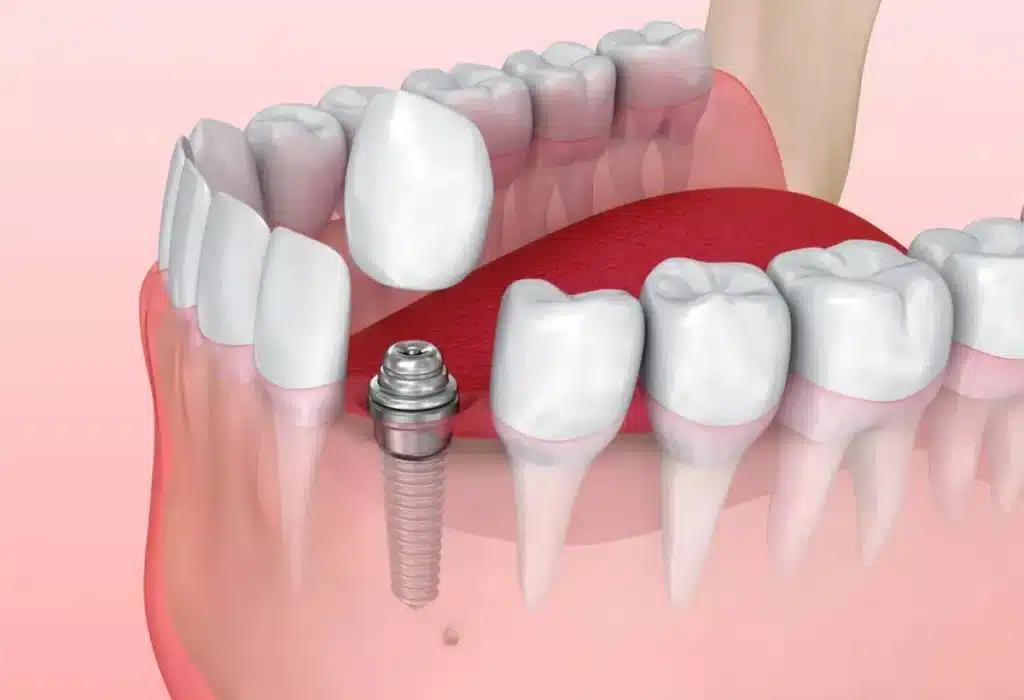
Rather than placing one implant per missing tooth, four carefully positioned implants hold a single, connected set of teeth. Fewer implants means fewer places that need thick bone, which is helpful when bone has thinned over the years.
The role of tilted (angled) implants
The two back implants are placed at an angle instead of straight up and down. This lets them reach and grip denser bone toward the front of the jaw and avoid areas that have shrunk. Angling the implants often removes the need for extra grafting and gives the finished teeth a solid, spread-out base.
Immediate function and provisional restorations
In many cases, a temporary fixed set of teeth is attached the same day, so you leave with a full smile rather than an empty gap. This provisional set stays in place while everything heals, and it is later replaced with your final, permanent teeth.
A note from Dr. Brian Rencher“I tell my Twin Falls patients not to count themselves out because someone once said they lacked bone. With a 3D scan, we often find plenty of quality bone to anchor into. The tilted-implant design was made for exactly these situations.” |
Why Bone Loss Happens After Tooth Loss
Bone loss happens because the jawbone needs the daily stimulation of teeth to stay full and strong. When teeth are gone, the body slowly reabsorbs that unused bone, and gum disease can speed the process along.
Resorption of the jawbone over time
Once a tooth is lost, the ridge of bone that held it begins to shrink. This can happen faster in the first year and then continues gradually. Over time, it can change the shape of your jaw, and even your facial profile, which is one reason replacing teeth sooner is helpful.
Gum disease and other contributing factors
Long-term gum disease is a major cause of bone loss because it breaks down the bone that supports teeth. Smoking, certain health conditions, and years of wearing a loose denture can also contribute. Good daily care matters at every stage, and our tips on simple habits for healthy gums can help protect what you have.
How Much Bone Loss Is Too Much for Implants?
There is no single number that rules everyone out. What matters is whether enough quality bone remains in the right places to hold implants securely, and that is decided by a 3D scan rather than a guess.
How dentists measure available bone
We use a 3D scan to see the exact height, width, and density of your jawbone from every angle. This lets us find the strongest zones and plan where each implant should go. A flat X-ray alone cannot show this, which is why the 3D image is such an important step.
When standard implants may not be possible
Straight, standard implants need a certain amount of tall bone to sit in. When the ridge has shrunk too much for that, it does not automatically mean no implants. It often means we switch to angled implants, longer implants, or rebuild the ridge first. The plan is matched to your bone, not the other way around.
Important noteEvery case is different. Some people do need grafting or advanced techniques, and a few may not be candidates at all. Only an in-person exam and scan can give you a reliable answer, so treat online estimates as general information rather than a promise. |
Options When You Don’t Have Enough Bone
When bone is limited, you still have several good paths forward: rebuilding the ridge with grafting, using tilted or longer implants that work around thin areas, or advanced approaches for the most severe cases.
Bone grafting to rebuild the ridge
Bone grafting adds material to thin areas so the ridge becomes tall and wide enough for implants. It is a well-established option and sometimes the best route for a strong long-term result. Our guide to tooth extractions and advanced bone grafting explains what to expect.
Tilted and longer implants to avoid grafting
For many people, angling the implants or using longer ones lets us anchor into the bone you already have and skip a separate grafting surgery. This can shorten treatment and reduce the number of procedures. It is one of the biggest advantages of the All-on-4 design.
Advanced approaches for severe cases
When bone loss is severe, there are still advanced solutions that reach into stronger areas of the facial bones for support. These are more specialized and are only recommended after careful planning. The point is simple: severe bone loss is a reason for a detailed plan, not an automatic “no.”
Helps your implant success
|
Works against it
|
Your Next Step in Twin Falls, ID
Your next step is a consultation and 3D scan, which is the only way to get a clear answer about your bone and your options. From there, we build a plan around your specific jaw.
What a consultation and 3D scan involves
| 1 | Review your health and goals We talk through your dental history, general health, and what you want from your smile. |
| 2 | Take a 3D scan of your jaw This maps your bone in detail so we can see exactly where strong bone is available. |
| 3 | Build your personal plan We explain your options clearly, including whether grafting is needed and what your timeline looks like. |
| 4 | Move forward with confidence Once you are comfortable, we schedule your treatment and support you through healing and follow-up. |
Simplifying Dental Costs with Our Membership Plan
Many patients feel unsure about dental insurance. To make things easier, we offer a simple alternative.
At Advanced Dental Care of Twin Falls, our Membership Plan removes the complexity of traditional insurance.
Membership Options
Child Complete – $22 per month or $264 per year
Adult Complete – $33 per month or $396 per year
Perio Maintenance – $63 per month or $756 per year
Benefits include cleanings, exams, routine X-rays, and discounts on treatment. There are no deductibles, no yearly maximums, and no claim denials.
What Patients Are Saying
We are proud to maintain a 5-star reputation in the Magic Valley community.
Read patient experiences on our Reviews page or share your own feedback through Share Your Reviews.
Why Advanced Dental Care of Twin Falls Stands Out
Our approach includes:
- Fellowship recognition in the American Academy of Clear Aligners
- Accelerated four-day aligner changes
- Virtual monitoring through the Invisalign app
- Simple and practical hygiene guidance
- Clear retainer preference for long-term care
- Transparent membership savings
Every detail is designed to ensure a smooth, comfortable experience.
Planning Your Visit
- Start with your consultation with Dr. Brian Rencher
- Contact us through our Contact Us page
- Prepare by reviewing Your First Visit
- Plan your route with Get Directions
- Get directions using Google Maps
Plan your treatment with Dr. Brian Rencher
Dr. Brian Rencher, a Twin Falls native, plans each case around the bone and goals in front of him rather than a one-size-fits-all script. To take the next step, call our team at 208-734-8080. While you plan, keeping your mouth healthy matters, so our 5-minute morning routine for a healthier smile is worth a look.
Frequently asked questions
| Q: How much is too much bone loss for implants? There is no fixed cutoff. What matters is whether enough quality bone remains in the right spots to hold implants securely. Mild to moderate bone loss is usually fine for All-on-4, and even severe cases often have advanced options. A 3D scan is the only reliable way to know your situation. |
| Q: What to do if there is not enough bone for dental implants? You still have choices. Options include bone grafting to rebuild the ridge, tilted or longer implants that anchor into your existing bone, or advanced approaches for very severe cases. A consultation and 3D scan will show which path fits your jaw. |
| Q: Who is not a candidate for All-on-4 dental implants? People with untreated gum disease, uncontrolled health conditions, or extremely severe bone loss may need extra treatment before implants, and a few may not qualify at all. Many of these situations can be managed with the right plan, so an in-person evaluation is essential. |
| Q: Can people with severe bone loss get implants? Often, yes. Even with severe bone loss, there are advanced techniques that reach into stronger areas of the facial bones for support, and grafting can rebuild thin ridges. These require careful planning, so a detailed exam and scan come first. |
| Q: Does All-on-4 help prevent further bone loss? Yes. Implants stimulate the jawbone in a way missing teeth cannot, which helps slow the ongoing shrinkage that happens after tooth loss. Replacing teeth sooner rather than later gives you the best chance to preserve your remaining bone. |
Meet Dr. Brian Rencher
Dr. Brian Rencher is a Twin Falls native with extensive experience in cosmetic dentistry, Invisalign, and dental implants. He practiced alongside his father for 18 years and received the prestigious AACA Fellow award in 2024, an honor held by fewer than 100 dentists worldwide.
A graduate of Idaho State University and the University of Louisville School of Dentistry, Dr. Rencher is also fluent in Spanish. He is passionate about humanitarian dentistry and has supported organizations such as Special Olympics, Give Kids a Smile, Boy Scouts of America, and Dentistry from the Heart.
Outside the office, Dr. Rencher enjoys skiing, soccer, boating, and spending time outdoors with his wife, Jodie, and their four children. At Advanced Dental Care of Twin Falls, he remains committed to improving lives through healthy, confident smiles.
Remember: Bone loss rarely means the end of the road, and a simple 3D scan is the best way to learn your real options for a full new smile.
Disclaimer: This article is for general information only and is not a substitute for a personal exam or professional dental advice from a qualified provider.