

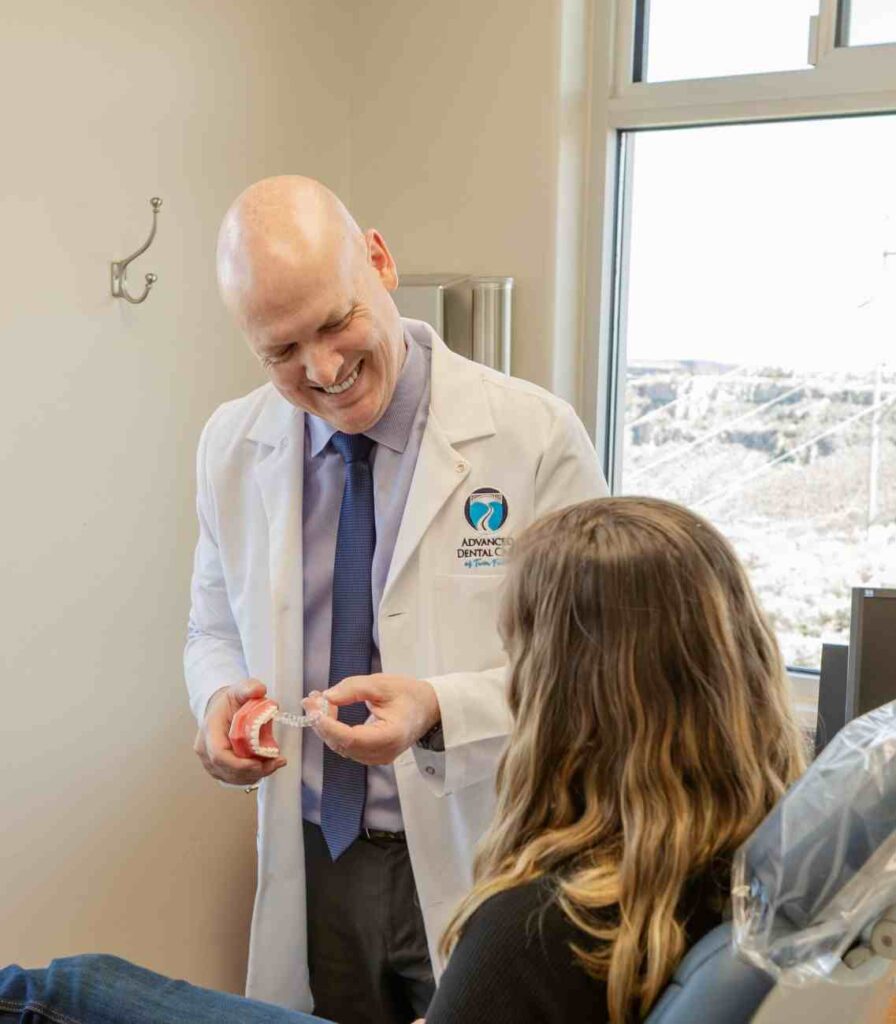
Tooth wear is more common than many people realize. People of all ages experience gradual enamel loss due to grinding, clenching, acidic foods, uneven bite pressure, or everyday habits that slowly wear down the teeth. Over time, this can lead to sensitivity, flattened edges, small chips, discomfort, and changes in appearance.
Many patients are now asking whether Invisalign can help protect their teeth while improving alignment. The answer is often yes. Clear aligner treatment may help reduce unnecessary pressure on teeth, improve bite balance, and support healthier long-term function when guided by an experienced provider.
If you are searching for Invisalign for tooth wear, understanding how aligners work can help you make informed decisions about protecting your smile.
At Advanced Dental Care of Twin Falls, patients receive a highly customized and efficient Invisalign experience. Led by Dr. Brian Rencher alongside Dr. Gaige Kepner and Dr. Rachel Dillard, the practice is recognized as:
- Platinum Invisalign Provider 2025
- Idaho’s BEST OF 2026 STATEWIDE WINNER
- TIMES-NEWS The Best of Magic Valley Readers’ Choice 2025 WINNER
- 5-Star Rated Dentist on Google
This level of recognition reflects consistent results, advanced expertise, and a strong focus on patient care.
Understanding Tooth Wear
Tooth wear happens when enamel gradually breaks down. Enamel is the protective outer layer of the teeth. Once it becomes damaged, the body cannot naturally rebuild it.
Several factors contribute to enamel loss, including:
- Teeth grinding during sleep
- Clenching caused by stress
- Uneven bite pressure
- Acidic beverages and foods
- Poor alignment
- Aggressive brushing habits
- Age-related wear
When teeth do not come together properly, certain areas absorb more force than they should. Over time, those pressure points can create excessive friction and enamel deterioration.
Patients often notice symptoms such as:
- Increased sensitivity
- Rough or flattened tooth edges
- Tiny cracks or chips
- Jaw soreness
- Frequent headaches
- Teeth appearing shorter
- Discomfort while chewing
Without treatment, these issues may continue progressing and eventually require more extensive restorative work.
How Invisalign Helps Reduce Enamel Wear
One of the biggest benefits of Invisalign is its ability to improve how teeth fit together. Proper alignment distributes biting forces more evenly across the smile.
When pressure becomes balanced, individual teeth are less likely to experience excessive friction or grinding damage.
Many patients seeking help for worn enamel are surprised to learn that alignment issues may be contributing to their symptoms. Clear aligners gradually reposition the teeth to improve function and appearance.
For patients wondering how Invisalign helps reduce enamel wear, several key factors are at play.
Improved Bite Alignment
Teeth that overlap, crowd, or hit unevenly often create concentrated pressure points. Invisalign treatment carefully moves teeth into healthier positions, reducing stress on vulnerable surfaces.
Balanced bite function can help minimize ongoing wear patterns that may otherwise worsen.
Protection From Grinding
The aligners themselves create a thin protective barrier between upper and lower teeth. While aligners are not the same as a night guard, many patients notice reduced grinding-related damage during treatment.
This added layer can help decrease direct enamel-to-enamel contact.
Better Long-Term Oral Health
Straight teeth are easier to clean properly. Plaque buildup and bacteria around crowded areas may contribute to enamel weakening over time.
Patients using Invisalign often find brushing and flossing more effective after alignment improves.
Managing Grinding With Clear Aligners
Grinding, also called bruxism, is one of the leading causes of tooth wear. Many people grind their teeth without realizing it, especially while sleeping.
Stress, sleep habits, and bite imbalance may all contribute to the problem.
Managing grinding with clear aligners can provide several advantages for suitable patients. Because the trays fit snugly over the teeth, they can reduce direct friction during nighttime clenching.
At Advanced Dental Care of Twin Falls, treatment plans are carefully designed to evaluate both cosmetic goals and functional concerns. Addressing alignment while monitoring wear patterns helps support healthier long-term outcomes.
Patients experiencing grinding-related enamel loss often benefit from a customized evaluation to determine whether Invisalign is appropriate for their needs.
Can Invisalign Completely Stop Tooth Wear?
Although Invisalign can significantly help reduce contributing factors, no treatment can guarantee complete prevention of future wear.
Success depends on several factors, including:
- Severity of grinding habits
- Existing enamel damage
- Diet and oral hygiene
- Consistency with aligner wear
- Long-term retention habits
- Overall bite function
However, many patients experience meaningful improvements when alignment issues and uneven pressure are corrected early.
For individuals already noticing flattening, sensitivity, or visible wear, seeking professional guidance sooner rather than later may help preserve natural tooth structure.
Who May Benefit Most From Invisalign for Tooth Wear?
Clear aligners may be especially beneficial for patients who experience:
- Mild to moderate crowding
- Uneven bite pressure
- Minor spacing issues
- Grinding-related enamel wear
- Chipped edges from clenching
- Difficulty cleaning crowded teeth
- Cosmetic concerns combined with functional problems
A personalized evaluation helps determine whether treatment is appropriate for your goals and dental condition.
The team at Advanced Dental Care of Twin Falls focuses on individualized planning rather than one-size-fits-all recommendations.
Invisalign Treatment by Dr. Brian Rencher
Choosing the right provider plays a major role in your experience.
Patients seeking Invisalign treatment by Dr. Brian Rencher benefit from advanced expertise and a structured approach.
Dr. Rencher has been inducted as a Fellow in the American Academy of Clear Aligners, a distinction held by fewer than 100 professionals worldwide. This reflects extensive experience and a strong commitment to care.
The comprehensive Invisalign care by Dr. Brian Rencher focuses on precise planning, digital monitoring, and easy-to-follow routines.
You can also explore our full team on the Meet The Doctors page.
Simplifying Dental Costs with Our Membership Plan
Many patients feel unsure about dental insurance. To make things easier, we offer a simple alternative.
At Advanced Dental Care of Twin Falls, our Membership Plan removes the complexity of traditional insurance.
Membership Options
- Child Complete – $22 per month or $264 per year
- Adult Complete – $33 per month or $396 per year
- Perio Maintenance – $63 per month or $756 per year
Benefits include cleanings, exams, routine X-rays, and discounts on treatment. There are no deductibles, no yearly maximums, and no claim denials.
This allows you to focus on maintaining healthy habits throughout your Invisalign journey.
What Patients Are Saying
We are proud to maintain a 5-star reputation in the Magic Valley community.
Read patient experiences on our Reviews page or share your own feedback through Share Your Reviews.
Planning Your Visit
If you are ready to begin your journey toward straight teeth without braces, scheduling is simple.
- Start with your Invisalign consultation with Dr. Brian Rencher
- Contact us through our Contact Us page
- Prepare by reviewing Your First Visit
- Get directions using Google Maps
- Plan your route with Get Directions
Key Takeaways
- Invisalign for tooth wear may help reduce uneven pressure on teeth and support healthier enamel over time.
- Clear aligners can help manage grinding by creating a protective barrier between upper and lower teeth.
- Advanced Dental Care of Twin Falls offers virtual Invisalign check-ins, making treatment more convenient for busy patients.
- The clinic uses accelerated aligner protocols that may help some patients complete treatment in as little as 6–9 months.
- Dr. Brian Rencher’s advanced expertise in clear aligners and AACA Fellowship reflects extensive experience in customized smile care.
FAQ’s
1. Can Invisalign help prevent tooth wear?
Yes, Invisalign may help reduce enamel wear by improving bite alignment and minimizing uneven pressure on teeth.
2. Does Invisalign help with teeth grinding?
Many patients find that aligners help reduce friction from grinding by acting as a protective layer between the teeth.
3. How long does Invisalign treatment usually take?
Treatment time varies, but some patients at Advanced Dental Care of Twin Falls may complete treatment in as little as 6–9 months, depending on their case.
4. Are virtual Invisalign check-ups available?
Yes, the office offers virtual monitoring through the Invisalign app, allowing patients to submit progress photos from home.
5. Can clear aligners improve oral hygiene?
Yes, straighter teeth are generally easier to clean, which may help support better long-term oral health.
Conclusion
Tooth wear can gradually impact your comfort, oral health, and confidence, especially when caused by bite imbalances or grinding. Invisalign may help reduce these contributing factors by improving tooth alignment, creating a more balanced bite, and limiting unnecessary pressure on specific teeth. At Advanced Dental Care of Twin Falls, personalized Invisalign treatment is designed to support both the appearance and long-term health of your smile. If you have noticed signs of enamel wear, sensitivity, or grinding, a consultation can help determine the best path forward for protecting your natural teeth.
——————————————————————————————————————————————————————————————————————–
Remember: Tooth wear can gradually worsen if left untreated. Early evaluation and personalized care may help protect enamel, improve bite balance, and support long-term smile health. Consistent aligner wear, good oral hygiene, and regular dental visits all play an important role in maintaining results.
Disclaimer: This blog is intended for informational purposes only and should not replace professional dental advice, diagnosis, or treatment. Individual results may vary depending on oral health conditions and treatment needs. Please consult a qualified dental professional for personalized recommendations.